Original article in Bahasa Indonesia; this is a translation.
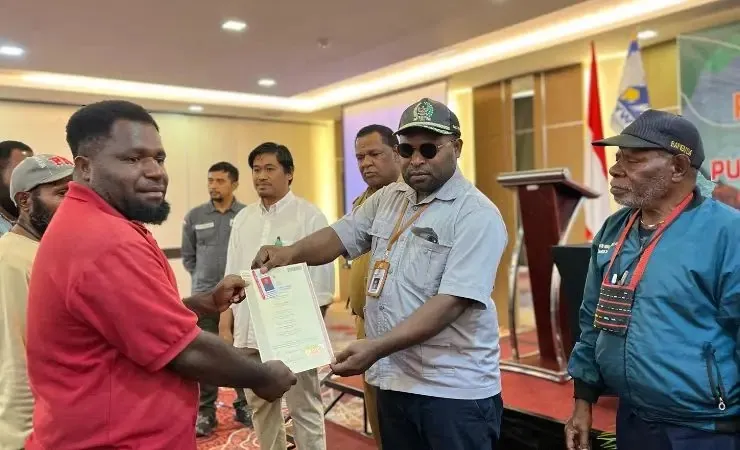
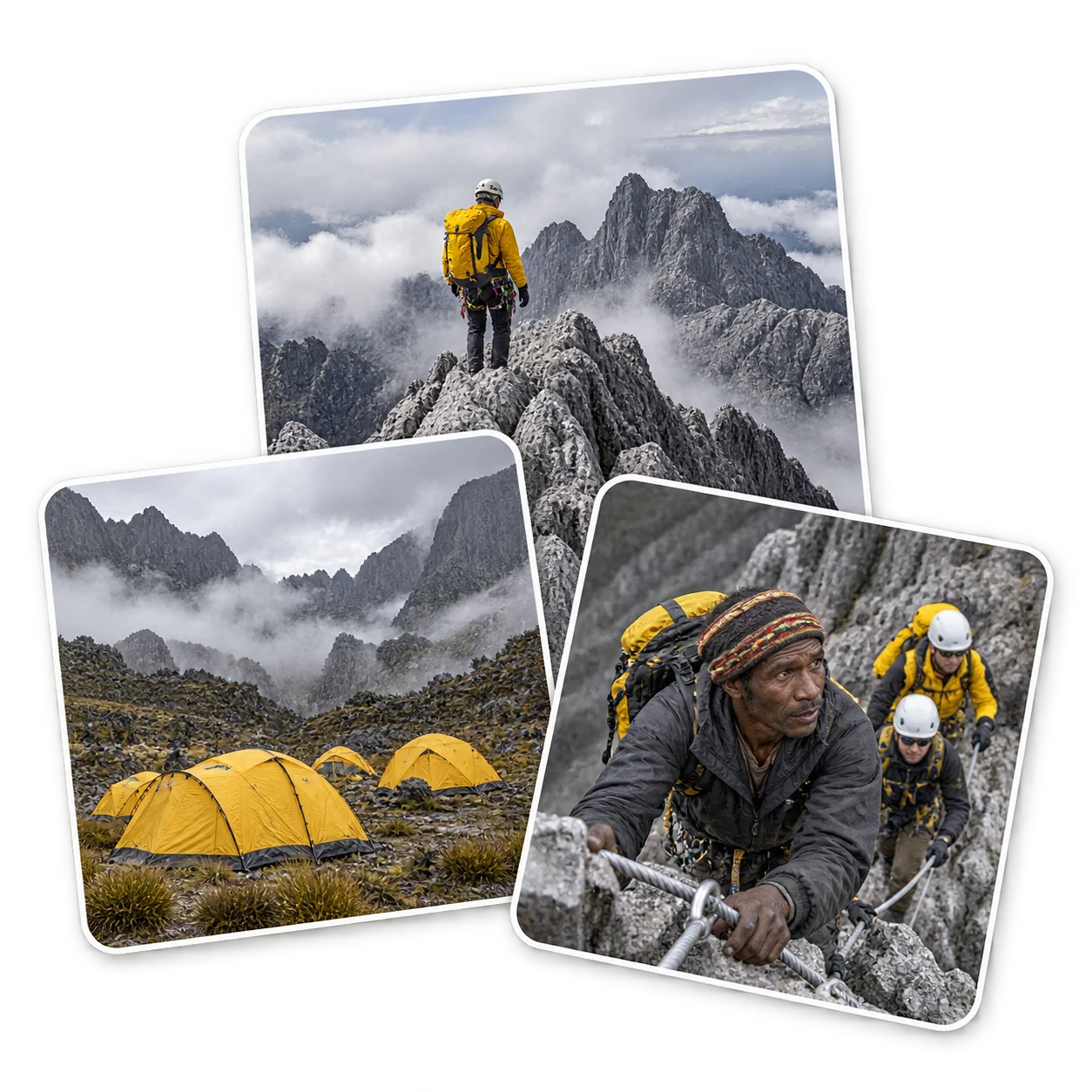
Yayasan Wisatari Alam Papua (YWAP) has presented certificates to dozens of Indigenous community members living around the Jayawijaya Mountains, giving them formal standing to accompany climbers to Puncak Carstensz.
Yayasan Wisatari Alam Papua (YWAP) has presented certificates to dozens of Indigenous community members living around the Jayawijaya Mountains (Puncak Carstensz).
YWAP founder Dolfin Beanal explained that the certificates serve as legal recognition for Indigenous people to accompany tourists climbing Puncak Carstensz in Mimika Regency, Central Papua.
“With these certificates, these Indigenous young people can be engaged by investors to accompany tourists to Carstensz,” Dolfin said after the certificate presentation at Hotel Horison Diana on Tuesday (23/9/2025).
According to him, Carstensz tourism can generate income for the communities around the mountain, so they must be involved.
“Because there is money in it, we are embracing them by giving them these certificates from the Ministry. They now hold licences, so companies that bring climbers can involve them,” Dolfin explained.
He hoped that, from this presentation onwards, tourism to Puncak Carstensz could also be supported by the Mimika Regency Government, particularly the Office of Tourism, Culture, Youth and Sports (Disparbudpora).
“That way this is not only taken advantage of by companies from outside. If the relevant office pays attention to this, it could also increase regional revenue,” he said.
Community members who hold these certificates are under the umbrella of YWAP, and can also set up their own business entity (a CV or PT) to run tourism businesses to Puncak Carstensz.
He revealed that climbs to Puncak Carstensz have often been marked by accidents and other problems because Indigenous communities were not involved in the climbs.
“The community owns this mountain, so they must be involved so that no one is disadvantaged, neither the climbers nor the community,” he said.
He added that the community members receiving these climbing-companion certificates are not only from the Amungme tribe, but also from the Mony tribe and other tribes.
“So we have taken them from the villages around the foot of the mountain,” he concluded.